

Knowledge Graph PR tools are specialized platforms, datasets, and API utilities used by digital PR specialists and SEO professionals to establish, track, and manage brand entities within search engine knowledge bases.
Unlike traditional public relations, which measures success through press clippings or backlink volume, Knowledge Graph PR focuses on machine readability, entity disambiguation, and corroborating citations across authoritative sources.
The primary tool stack required to trigger, claim, and protect a Google Knowledge Panel includes Kalicube Pro (entity mapping and corridor tracking), WordLift and InLinks (automated JSON-LD schema and entity extraction), Google Knowledge Graph Search API (entity ID and confidence score monitoring), and digital PR discovery platforms like Muck Rack or BuzzSumo (securing entity-recognized press mentions).
By combining structured data deployment with targeted entity PR, webmasters can explicitly tell search algorithms who they are, what they do, and which external platforms confirm their identity.
The Strategic Shift: Backlinks vs. Entity Reconciliation
Traditional digital PR relies heavily on obtaining followed links from high-Domain Authority (DA) publications. While links remain an essential ranking factor, search engines operate primarily on an entity-first indexing model.
Google’s Knowledge Graph translates web pages into nodes (entities) and edges (relationships), assessing brand credibility through topical consensus across trusted databases rather than raw link equity.
When executing Knowledge Graph PR, your objective is entity reconciliation—eliminating ambiguity so that algorithms can confidently match your brand, executives, or products to verified real-world concepts.
Key structural differences between traditional PR and Knowledge Graph PR include:
- Target Outlets: Traditional PR targets high-traffic media sites. Knowledge Graph PR targets entity hubs already indexed in search engine knowledge vaults (e.g., Wikidata, Crunchbase, Reuters, Wikipedia, and specialized trade directories).
- Success Metrics: Traditional PR tracks coverage links and referral traffic. Knowledge Graph PR tracks Knowledge Panel triggers, Entity Confidence Scores via Google’s Knowledge Graph Search API, and
sameAsarray expansion. - Content Alignment: Traditional PR focuses on consumer hooks. Knowledge Graph PR focuses on factual triple statements (Subject-Predicate-Object) that align directly with semantic optimization strategies.
Core Knowledge Graph PR Tools & Software Matrix
To systematically build entity authority, SEO teams must combine specialized entity management software with digital PR discovery engines. The table below outlines the core tools utilized in modern Knowledge Graph management:
| Tool / Platform | Primary PR Function | Key Entity Feature | Ideal Application |
| Kalicube Pro | Entity Corridor Mapping & Monitoring | Brand SERP analysis, Google ecosystem tracking | Full entity audit, Knowledge Panel acquisition, brand protection |
| WordLift | Semantic Schema & Knowledge Graph Creation | Custom Knowledge Graph building, internal triples | E-commerce and publisher structured data automation |
| InLinks | Entity Extraction & Internal Link Building | NLP entity recognition, automated schema generation | On-page entity alignment and topic clusters |
| Google KG API Visualizers | Entity Confidence & ID Verification | Raw Google Knowledge Graph ID lookup | Measuring machine understanding before and after PR outreach |
| Muck Rack / BuzzSumo | Entity-Specific PR Citation Discovery | Journalist database and unlinked brand tracking | Securing authoritative brand mentions on trusted publications |
| Wikidata & QuickStatements | Canonical Knowledge Base Seeding | Structured item creation and property links | Building foundational reference nodes for eligible entities |
1. Kalicube Pro
Kalicube Pro serves as the enterprise standard for managing Brand SERPs and Knowledge Panels. It analyzes search results across multiple geographic regions to identify a brand’s “Entity Home”—the canonical URL Google considers the primary source of truth for that entity. The platform maps out the exact sequence of third-party websites Google trusts for a specific industry (the Entity Corridor), allowing PR teams to focus outreach exclusively on platforms that directly feed Google’s Knowledge Graph.
2. WordLift & InLinks
While digital PR provides external confirmation, WordLift and InLinks handle on-page entity orchestration. WordLift builds a custom Knowledge Graph directly on your website using Schema.org RDF triples, automatically linking content to authoritative concepts in DBpedia and Wikidata. InLinks reads page content using natural language processing (NLP) to generate precise About and Mentions schema syntax, establishing direct semantic context that prevents search algorithm volatility from misinterpreting core offerings.
3. Digital PR & Unlinked Mention Engines
Unlinked brand mentions on top-tier news publications are often sufficient to trigger or update a Knowledge Panel, provided the surrounding text clearly states the entity’s attributes. Tools like Muck Rack, BuzzSumo, and Brand24 allow PR professionals to identify journalists covering relevant topical nodes. When pitching, campaigns should aim to secure references alongside established industry entities to accelerate algorithmic association.
Technical Workflow for Entity PR Execution
Successfully securing a Google Knowledge Panel requires connecting structured technical data with off-page public relations. Follow this sequential execution framework:
Step 1: Identify and Verify the Entity Home
Every Knowledge Graph PR campaign begins at the Entity Home—typically the brand’s “About Us” page or organization homepage. Ensure this page contains clear, concise, and unambiguous factual text defining the organization, its founders, products, and industry classification.
Step 2: Implement Comprehensive Structured Data Markup
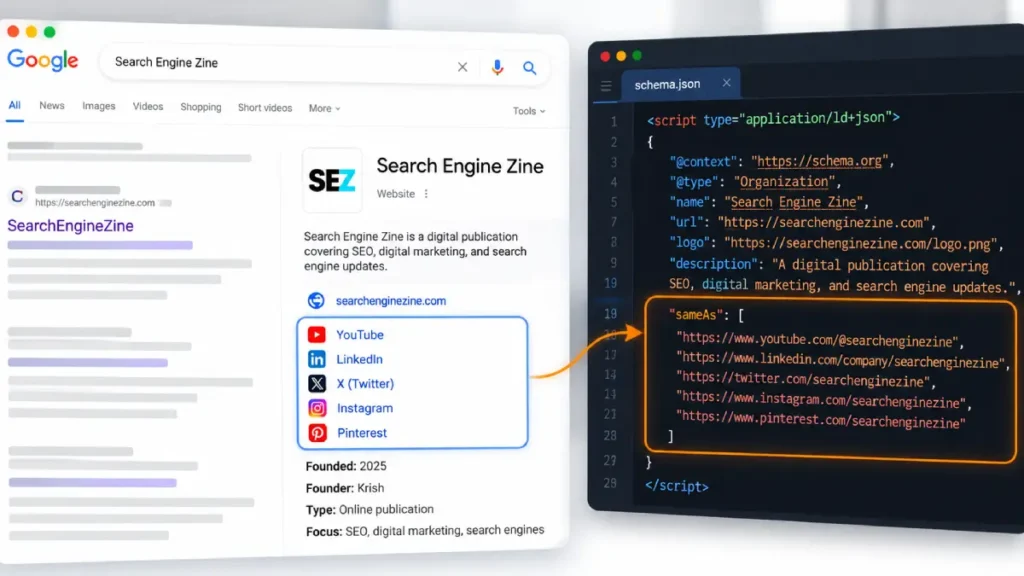
Deploy detailed JSON-LD markup on the Entity Home. Use the Organization or Person schema type, explicitly listing all verified third-party profiles inside the sameAs array. Utilize standardized syntax per structured data implementation standards, linking out to canonical references using Schema.org sameAs properties.
{
“@context”: “https://schema.org“,
“@type”: “Organization”,
“@id”: “https://example.com/#organization“,
“name”: “Enterprise Entity Inc.”,
“url”: “https://example.com“,
“sameAs”: [
“https://www.wikidata.org/wiki/Q123456“,
“https://www.crunchbase.com/organization/example“,
“https://en.wikipedia.org/wiki/Example“,
“https://www.linkedin.com/company/example“
]
}
Step 3: Seed Reference Nodes on Trusted Databases
Create or update structured profiles on authoritative open-data platforms. If eligible, create an item in the Wikidata knowledge base, ensuring every claim is supported by external secondary sources (such as news coverage or academic journals). Secondary data hubs include Crunchbase, Bloomberg, PitchBook, and official industry registries.
Step 4: Execute Entity Corroboration PR Campaigns
Conduct digital PR outreach to secure press coverage that reinforces the exact claims made on your Entity Home. Ensure media coverage consistently uses standardized brand naming, executive titles, and primary product classifications. Once published, update your sameAs schema and Kalicube tracking dashboards to verify that search engine crawlers have reconciled the new corroborating evidence.
Summary Checklist for SEOs & Webmasters
- Locate your Entity ID: Query Google’s Knowledge Graph API to check if an entity ID (
/g/11...or/m/0...) already exists for your brand. - Establish the Entity Home: Designate one clear, self-owned URL as the sole canonical source of truth.
- Align Third-Party Citations: Ensure name, address, leadership, and founding date match identically across Wikipedia, Wikidata, Crunchbase, and PR placements.
- Deploy RDF Triples &
sameAsMarkup: Hardcode clear relationships between your brand and trusted industry nodes. - Monitor Disambiguation: Use entity tracking tools to ensure search engines do not confuse your brand with entities sharing similar names.