
Off-page SEO is fundamentally about reputation. While on-site optimization communicates relevance, off-site signals influence how search engines interpret authority, credibility, and trust.
These signals extend beyond backlinks alone — they include brand mentions, digital PR visibility, local reputation signals, and the overall quality of your link profile.
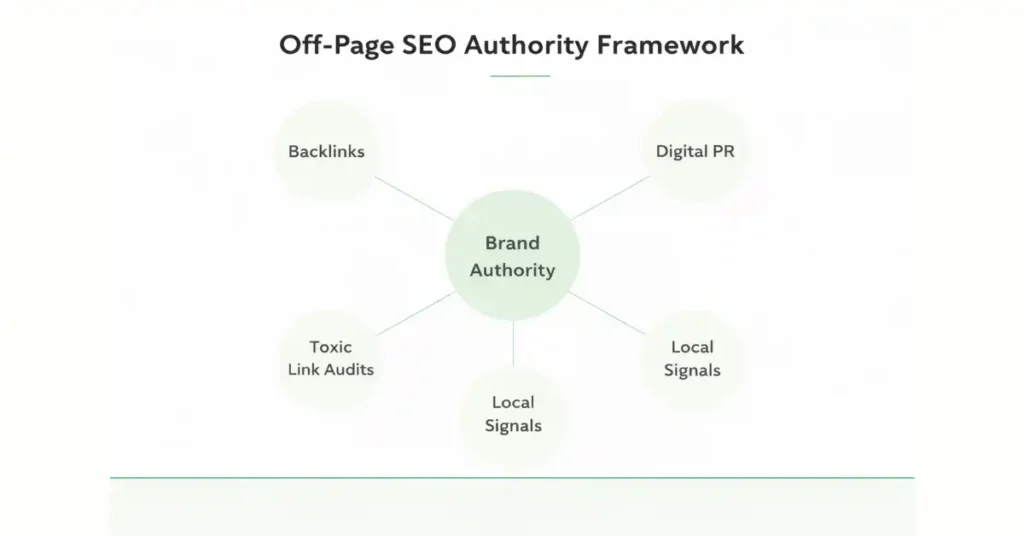
This Off-Page mastery hub organizes the discipline into four structured systems: backlink acquisition and evaluation, digital PR strategy, local authority reinforcement, and toxic link risk management.
Each cluster addresses how external signals shape search engine perception and contribute to long-term ranking stability.
Modern search algorithms are increasingly sophisticated in detecting manipulative patterns. Sustainable off-page optimization focuses on earning references through expertise, relationships, and value creation — not shortcuts.
Evaluating link quality, maintaining a clean profile, and aligning outreach with genuine brand positioning are essential components of responsible authority building.
By approaching off-page SEO through reputation management rather than link quantity, you strengthen long-term visibility while reducing algorithmic risk.
A Complete Off-Page Optimization System Covering Backlink Acquisition, Digital PR, Local Authority Signals & Toxic Link Audits
BACKLINKS (14)
- Enterprise Link Building Strategy: Scale Link Acquisition in High-Competition Niches
- Link Equity Analytics: Computational Models for Measuring Page Node Internal Values
- Resource Page Siloing: Internal Link Graph Engineering for Equity Reallocation
- Tier-1 Editorial Strategy: Sourcing Original Data Metrics to Secure Authority Links
- Link Velocity Anomalies: Time-Series Modeling and Algorithmic Pattern Mitigation
- Broken Link Building: Systematically Restructuring Legacy Web Disconnects
- Toxic Link Forensics: Algorithmic Filter Risk Mitigation and Backlink Auditing
- Unlinked Brand Reclamation: Automated Extraction and Entity Graph Enrichment
- Digital PR Outreach: Systematic Pitch Distribution to Tier-1 Media Networks
- Co-Citation Graphs: Graph Network Analysis for Topical Cohort Inferences
- Link Neighborhood Trust: Risk Analysis of Shared Subnets and Bad Association
- Anchor Text Vector Modeling: Applying Word Embeddings to Graph Architecture
- Connectively HARO Guide 2026: Analysis and Sourcing Strategies
- Skyscraper Technique 2.0: Systematic Editorial Distribution Layouts
PR (4)
- Digital PR Entity Building: Systematically Validating Node Connections in Google’s Knowledge Graph NEW
- Author Entities: Data Methods to Strengthen Digital Authority Signatures
- Linkless Brand Mentions: Technical Framework for Co-Occurrence Mapping
- Entity PR: Systematically Building Semantic Search Trust and Graph Connections
LOCAL (4)
TOXIC (7)
- Google Penalty Auditing: Diagnostic Protocols for Distinguishing Algorithmic Filters NEW
- Fake DMCA Takedown Recovery: Legal Protocols and Search Remediation Methods
- Internal Search Spam Recovery: Technical Protocols for Crawl Hygiene
- Negative SEO Forensics: Time-Series Data Profiling and Technical Mitigation
- Negative SEO Recovery: Systematic Forensic Auditing and Traffic Restoration
- Block Negative SEO: Technical Remediation and Traffic Protection Frameworks
- Enterprise SEO Defense: Managing Algorithmic Risk and Toxic Negative Activity
Building authority is a gradual process rooted in credibility and trust. A strong backlink profile reflects expertise, relevance, and genuine recognition within your industry — not artificial amplification.
Use this hub as a reference when planning outreach, auditing link quality, strengthening local trust signals, or mitigating potential risks.
Sustainable off-page optimization protects your site’s integrity while reinforcing its position within the broader digital ecosystem.
Off-Page Mastery: Building Sustainable Authority, Trust, and Search Reputation
Understanding Off-Page Mastery in Modern SEO
Off-Page Mastery is the strategic process of strengthening a website’s authority, credibility, reputation, and trust signals across the broader digital ecosystem.
While on-page SEO helps search engines understand what a website is about, off-page SEO helps search engines evaluate how the wider web perceives that website in terms of expertise, reliability, influence, and contextual relevance.
Modern search algorithms no longer rely solely on backlinks as simplistic ranking votes. Search ecosystems have evolved significantly through semantic indexing systems, AI-assisted retrieval technologies, entity-based interpretation, natural language processing, and increasingly sophisticated quality evaluation frameworks.
As a result, off-page SEO now extends beyond traditional link acquisition into broader reputation modeling involving:
- Brand authority
- Digital PR visibility
- Contextual mentions
- Local trust signals
- Editorial references
- Topical relevance
- Link profile quality
- Online reputation consistency
Effective Off-Page Mastery focuses on building authentic authority through trust, expertise, relationships, relevance, and value creation rather than relying on manipulative tactics designed to artificially inflate ranking signals.
Why Off-Page SEO Still Matters
Search engines increasingly evaluate websites holistically rather than relying solely on page-level optimization signals. Modern ranking systems analyze:
- Authority relationships
- External validation signals
- Contextual mentions
- Citation ecosystems
- Brand reputation patterns
- Link quality indicators
- User trust signals
Off-page SEO remains important because external references help search systems determine:
- Whether a website is trustworthy
- How authoritative it appears within its niche
- Whether others recognize its expertise
- How its reputation compares competitively
Search visibility is increasingly connected to broader digital reputation rather than isolated optimization alone.
The Evolution of Off-Page SEO
Traditional off-page SEO often focused heavily on:
- Link quantity
- Anchor text manipulation
- Directory submissions
- Low-quality link exchanges
- Automated outreach systems
Modern search systems have become far more sophisticated in identifying manipulative patterns and artificial authority signals.
Today, sustainable Off-Page Mastery focuses on:
- Editorial relevance
- Topical authority
- Genuine relationship building
- Brand visibility
- Contextual citations
- Semantic trust
- Natural authority growth
This shift reflects broader search engine goals centered around rewarding trustworthy, experience-driven, and genuinely valuable websites.
The Four Core Systems of Off-Page Mastery
A modern Off-Page Mastery framework typically involves four interconnected systems:
- Backlink Acquisition & Evaluation
- Digital PR & Brand Visibility
- Local Authority Reinforcement
- Toxic Link Risk Management
Together, these components help build sustainable reputation signals that support long-term search visibility and ranking stability.
Backlink Acquisition & Evaluation
Why Backlinks Still Matter
Backlinks continue serving as important authority signals because they help search engines understand how websites relate contextually across the web.
However, modern search systems increasingly evaluate:
- Link quality
- Contextual relevance
- Editorial placement
- Source trustworthiness
- Topical alignment
- Semantic relationships
A single highly relevant editorial link from an authoritative industry resource may provide significantly more value than hundreds of low-quality or unrelated backlinks.
Modern Off-Page Mastery focuses on earning:
- Contextually relevant links
- Editorial citations
- Expert references
- Industry recognition
- Brand mentions
- Trusted resource citations
rather than pursuing link quantity alone.
Understanding Link Quality
Not all backlinks provide equal value.
Search systems increasingly analyze:
- Source authority
- Relevance alignment
- Topical context
- Placement quality
- Link neighborhood signals
- Editorial integrity
High-quality backlinks typically originate from:
- Trusted publications
- Relevant niche websites
- Industry resources
- Editorial content
- Educational references
- Expert-driven platforms
Low-quality links often involve:
- Spam networks
- Manipulative directories
- Automated placements
- Irrelevant websites
- Artificial link schemes
A strong backlink profile prioritizes contextual quality over raw volume.
Why Relevance Matters More Than Volume
Modern search systems increasingly prioritize semantic relationships.
This means backlinks from topically aligned websites often carry stronger contextual authority signals than unrelated high-volume link sources.
For example:
- A technical SEO website linking to a semantic SEO guide creates strong contextual relevance.
- An unrelated gambling directory linking to the same guide may provide little meaningful value.
Off-Page Mastery, therefore, requires evaluating backlinks within the broader context of:
- Industry alignment
- Semantic consistency
- User relevance
- Authority ecosystems
Natural Link Acquisition
Sustainable link acquisition is typically earned through:
- Original research
- Expert analysis
- Data-driven content
- Thought leadership
- Useful tools and resources
- Educational publishing
- Industry collaboration
Modern search algorithms increasingly reward naturally earned references because they reflect genuine recognition rather than artificial manipulation.
Building authoritative resources often creates stronger long-term link acquisition opportunities than aggressive outreach alone.
Digital PR & Brand Visibility
Why Brand Signals Matter
Modern search systems increasingly evaluate broader brand visibility and reputation signals beyond traditional backlinks alone.
Digital PR helps strengthen:
- Brand recognition
- Editorial visibility
- Authority perception
- Citation ecosystems
- Industry trust signals
This may include:
- Interviews
- Expert commentary
- Research mentions
- Media references
- Industry coverage
- Podcast appearances
- Conference participation
Search engines increasingly interpret brand recognition as a proxy for credibility and trustworthiness.
Digital PR and EEAT
Google’s evolving quality systems increasingly emphasize:
- Experience
- Expertise
- Authoritativeness
- Trustworthiness
Digital PR contributes to these signals by helping establish:
- Public expertise recognition
- Third-party validation
- Industry visibility
- Trust-based reputation
Mentions from authoritative industry publications can strengthen broader trust ecosystems surrounding a brand or website.
Why Editorial Mentions Matter
Even unlinked mentions may contribute contextual brand signals.
Search systems increasingly analyze:
- Entity relationships
- Brand references
- Semantic associations
- Co-occurrence patterns
This means broader digital visibility may influence how search engines interpret authority and topical expertise.
Off-Page Mastery, therefore, involves building:
- Recognition
- Reputation
- Expertise visibility
- Contextual relevance
across the broader digital landscape.
Local Authority Reinforcement
Understanding Local Trust Signals
Local SEO increasingly depends on off-page authority systems involving:
- Reviews
- Citations
- Local mentions
- Geographic relevance
- Business reputation signals
Search systems evaluate local entities using:
- Consistency
- Trustworthiness
- Proximity relationships
- Local engagement patterns
- Reputation ecosystems
Local authority reinforcement helps businesses strengthen visibility within geographic search environments.
Reviews and Reputation Signals
Customer reviews increasingly function as:
- Trust indicators
- Engagement signals
- Reputation markers
- Sentiment data sources
Modern search systems increasingly analyze:
- Review quality
- Frequency patterns
- Sentiment consistency
- Authenticity signals
A strong local reputation strategy focuses on:
- Genuine customer experiences
- Consistent service quality
- Ethical review acquisition
- Long-term trust building
rather than artificial review manipulation.
Local Citations and Business Consistency
Local citations help reinforce:
- Business legitimacy
- Geographic consistency
- Entity verification
Consistent business information across:
- Directories
- Local platforms
- Industry resources
- Business databases
helps search engines validate business identity and location relevance.
Toxic Link Risk Management
Why Link Risk Management Matters
Modern search algorithms are highly effective at identifying manipulative or low-quality link patterns.
Toxic links may involve:
- Spam networks
- Link farms
- Automated backlinks
- Paid schemes
- Irrelevant directories
- Manipulative anchor text patterns
While search engines increasingly ignore many low-quality links automatically, large-scale manipulative profiles may still create:
- Trust issues
- Algorithmic instability
- Ranking volatility
- Reputation concerns
Off-Page Mastery includes maintaining a clean and trustworthy backlink ecosystem.
Conducting Link Audits
Regular backlink audits help identify:
- Suspicious domains
- Toxic neighborhoods
- Unnatural growth patterns
- Spam-heavy sources
- Over-optimized anchor distributions
Effective audits evaluate:
- Link quality
- Contextual relevance
- Source authority
- Traffic legitimacy
- Semantic alignment
This supports healthier long-term authority development.
Why Sustainable SEO Avoids Manipulation
Short-term link manipulation strategies often create:
- Ranking instability
- Algorithmic risk
- Reputation damage
- Long-term trust issues
Sustainable Off-Page Mastery focuses on:
- Relationship building
- Value creation
- Expertise visibility
- Editorial trust
- Contextual authority
This aligns more effectively with how modern search systems evaluate credibility.
Off-Page SEO and Semantic Search
Search systems increasingly interpret authority semantically rather than mechanically.
This means search engines analyze:
- Topic relationships
- Contextual citations
- Entity associations
- Brand ecosystems
- Industry relevance
A backlink from a semantically aligned resource often reinforces:
- Topical authority
- Contextual expertise
- Informational relevance
more effectively than unrelated high-volume links.
Why Entity-Based SEO Changes Off-Page Strategy
Modern search systems increasingly organize information around entities such as:
- Brands
- Businesses
- Products
- Topics
- Authors
- Organizations
Off-page SEO now involves strengthening:
- Entity recognition
- Contextual authority
- Reputation ecosystems
- Trust relationships
across the broader web environment.
Off-Page Mastery and Topical Authority
Topical authority increasingly depends on:
- Structured expertise
- Consistent relevance
- Contextual recognition
- Trusted references
Off-page signals help reinforce whether a website is recognized externally as an authoritative resource within its niche.
This includes:
- Industry citations
- Expert references
- Research mentions
- Editorial visibility
- Community recognition
Why Contextual Mentions Matter
Search systems increasingly analyze:
- Co-citation patterns
- Contextual associations
- Semantic proximity
- Brand-topic relationships
This means mentions surrounding your brand can influence:
- Topical relevance
- Authority interpretation
- Contextual trust signals
Off-Page Mastery, therefore, involves managing how your brand exists within broader digital conversations.
Building Authority Through Expertise
The strongest off-page authority often comes from:
- Publishing unique insights
- Producing research
- Creating valuable educational resources
- Sharing professional expertise
- Contributing meaningful industry analysis
Expert-driven content naturally attracts:
- Citations
- References
- Mentions
- Editorial links
- Industry visibility
This creates more sustainable authority growth over time.
Off-Page SEO and User Trust
Search systems increasingly prioritize websites demonstrating:
- Credibility
- Transparency
- Expertise
- Reliability
Off-page signals help validate whether users, publications, and industry ecosystems trust a website’s content and reputation.
Trust-building strategies include:
- Transparent publishing
- Consistent branding
- Ethical outreach
- Responsible link acquisition
- Genuine audience engagement
Why Off-Page SEO Is About Reputation
At its core, Off-Page Mastery is reputation management.
Modern search systems attempt to evaluate:
- Which websites deserve trust
- Which brands demonstrate expertise
- Which resources do users value most
- Which entities hold contextual authority
Off-page SEO helps shape these perceptions through broader external validation systems.
Off-Page SEO and AI Search
AI-assisted retrieval systems increasingly analyze:
- Semantic trust
- Contextual authority
- Entity recognition
- Reputation ecosystems
- Source credibility
As AI search continues evolving, broader reputation signals may become even more important for visibility within:
- AI-generated search summaries
- Conversational retrieval systems
- Semantic indexing environments
This makes sustainable Off-Page Mastery increasingly valuable for long-term discoverability.
Common Off-Page SEO Mistakes
Many websites still rely on outdated tactics such as:
- Mass link buying
- Private blog networks
- Spam directory submissions
- Automated outreach systems
- Exact-match anchor manipulation
Modern search systems increasingly detect and discount these manipulative behaviors.
Sustainable authority is built gradually through:
- Expertise
- Relationships
- Visibility
- Trust
- Value creation
Measuring Off-Page SEO Success
Off-page success should be measured beyond backlink counts alone.
Important indicators may include:
- Referral traffic quality
- Brand visibility growth
- Topical authority expansion
- Editorial mention frequency
- Local reputation improvements
- Semantic relevance signals
- Organic visibility stability
This broader approach creates a more accurate evaluation of long-term authority growth.
Why Sustainable Off-Page SEO Takes Time
Authority development is gradual because trust itself develops gradually.
Search systems increasingly prioritize:
- Historical consistency
- Reputation stability
- Long-term expertise signals
- Genuine authority growth
Shortcuts rarely produce sustainable results within modern search ecosystems.
Final Thoughts
Off-Page Mastery is no longer simply about building backlinks. It is about strengthening reputation, authority, trust, contextual relevance, and expertise recognition across the broader digital ecosystem.
Modern search systems increasingly evaluate:
- Semantic relationships
- Brand visibility
- Editorial trust
- Entity authority
- User satisfaction signals
- Contextual expertise
By focusing on:
- Sustainable backlink acquisition
- Digital PR visibility
- Local authority reinforcement
- Toxic link management
Websites can build stronger long-term authority while reducing algorithmic risk and improving overall search stability.
As search continues evolving through AI-assisted retrieval systems, semantic indexing technologies, and increasingly sophisticated quality evaluation models, Off-Page Mastery will remain fundamentally connected to one core principle:
Trust earned through genuine expertise and reputation consistently outperforms artificial authority manipulation over time.