
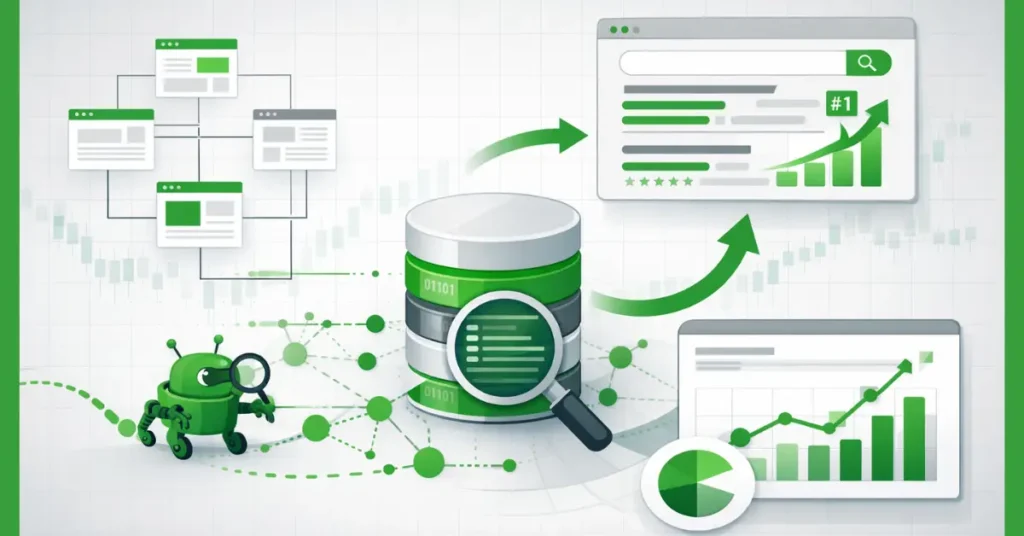
Search engine optimization is not a collection of tricks — it is a structured system built on how search engines crawl, interpret, and rank information.
Before diving into advanced tactics, every SEO professional needs a strong foundation in how search works, how content is evaluated, and how websites communicate relevance and authority.
This SEO Fundamentals hub is designed as a structured framework, not a checklist. It breaks down the core principles that govern modern organic visibility: the basics of search engine behavior, the logical mechanics behind ranking systems, essential terminology every practitioner must understand, and ongoing algorithm updates that shape the search landscape.
Each cluster below builds on the previous one, helping you move from conceptual understanding to strategic thinking.
Whether you are new to SEO or refining your core knowledge, this section ensures your strategy is grounded in first principles — not outdated myths.
A strong foundation reduces technical mistakes, improves content clarity, and creates a stable base for scaling into technical, on-page, off-page, and data-driven optimization.
A Structured SEO Framework Covering Basics, Logic, Glossary & Algorithm Updates
BASICS (15)
- SEO Audit Service: What a Professional Audit Should Actually Deliver NEW
- How to Monitor Local Google Search Engine Result Pages across Different Geolocations
- Semantic SEO Foundations: Data-Driven Framework for Topical Map Structures
- The Powerful SEO Techniques for Handling Mobile Only Content
- Meta Description Crafting: Linguistic Optimization for Search Visibility
- Mastering Title Tags: Optimizing Click-Through Rates on SERPs
- Topic over Keywords: Strategic Content Architecture Guide
- Competitor Keyword Gaps: Analytical Methods for Gap Mapping
- Keyword Intent Mapping: A Strategic Content Alignment Framework
- Long Tail Discovery: Finding Low-Competition Search Intent
- Modern Keyword Research: Analytical Methods for Topic Selection
- White Hat vs. Black Hat SEO: Core Risk Evaluation and Technical Differences
- Larry Page and Sergey Brin: Core Mathematical Principles of Google’s Architecture
- Evolution of Search Engines: Technical Milestones in Retrieval Architecture
- SEO 2025 Trends: Core Search Engine Changes Explained
LOGIC (18)
- Crawl Budget SEO: What It Is, When It Matters, and How to Optimize It NEW
- Semantic Distance Index (SDI) Framework: Technical Analysis of Search Context Patterns
- Search Engine Logic: System Architectures and Algorithmic Information Retrieval
- Entity Depth Framework: Technical Reference for Semantic Context
- Information Gain SEO Framework: Structuring Original Data Insights
- DOM Depth SEO: Structural HTML Changes for Rendering Optimization
- Server Header SEO: Configuration Guide for Crawlability
- Folder Logic vs. Flat Hierarchy: Structural Architecture Best Practices
- Noindex vs. Nofollow Signals: Technical Logic Patterns for Search Bots
- Canonicalization Logic: Structural Architecture for Crawl Efficiency
- The Indexing Pipeline: Technical Approach to Pipeline Optimization
- 404 vs. 410 HTTP Status Codes for SEO: Accelerated Deindexing Methods
- Robots.txt Logic Gates: Technical Framework for Crawl Optimization
- Discovery vs. Crawling: Accelerating Page Detection Architecture
- JavaScript Rendering Logic: Technical Optimizations for Indexing Efficiency
- Googlebot User Agents: Technical Reference for Web Crawlers
- Crawl Budget Optimization: Technical Framework for Faster Google Indexing
- How Google Works: Core Search Ranking Signals Explained
GLOSSARY (4)
UPDATES (5)
- Google Helpful Content Signals Updates: What Changed and What Matters Now NEW
- AI Overview Citations: Formatting Text for Large Language Model Synthesis Engines
- Core Update Volatility: Statistical Tracking and Risk Management
- March 2026 Google Ranking Volatility: Empirical Data Analysis
- Core Update Recovery Guide: Algorithmic Remediation and Rebuilding Search Trust
Mastering SEO fundamentals means understanding why strategies work — not just how to implement them.
As search engines evolve, the principles of crawlability, relevance, user value, and authority remain consistent.
By building your expertise from these core concepts, you create a durable SEO framework that adapts to algorithm updates rather than reacting to them.
Use this hub as your reference point whenever you expand into technical SEO, keyword strategy, on-page optimization, or link acquisition. Strong fundamentals make advanced execution predictable, measurable, and sustainable.
SEO Fundamentals: Architecting for Authority and AI Citation in 2026
The landscape of organic search has undergone a fundamental transformation. As of early 2026, over 58.5% of Google searches now end without a click, as AI Overviews (AIO) increasingly resolve queries directly on the search engine results page (SERP).
For practitioners, this means SEO Fundamentals are no longer just about “ranking #1” for a keyword; they are about becoming the definitive, verifiable source that AI systems cite.
In my experience managing enterprise-level migrations during the 2025 core updates, I’ve found that technical foundations and E-E-A-T (Experience, Expertise, Authoritativeness, and Trustworthiness) are no longer “optional optimizations”—they are the bedrock of visibility in a zero-click world.
The Three Pillars of 2026 SEO Fundamentals
To succeed today, a website must satisfy three distinct but interconnected layers of search visibility.
- Technical Accessibility: Ensuring search bots and LLMs can crawl, parse, and extract your data efficiently.
- Semantic Entity Mapping: Defining your brand’s relationship to specific topics within Google’s Knowledge Graph.
- Trust-Based Authority (E-E-A-T): Proving through verifiable experience that your content is more reliable than synthetic, AI-generated noise.
Technical Foundations: From Crawling to Extraction
Technical SEO changed for AI search
Technical SEO in 2026 has shifted from simple indexing to “extractability.” While crawlability and indexability remain the starting point, the focus is now on structured clarity—ensuring that AI systems can instantly identify facts, figures, and expert claims to synthesize them into conversational responses.
In my recent audits, I’ve noticed that “Crawl Decay”—where bots ignore deep-level pages due to poor site architecture—has become more punitive.
If a page isn’t within three clicks of the homepage, its likelihood of being cited in an AI Overview drops significantly.
| Metric | 2026 Benchmark | Strategic Importance |
| Organic CTR (with AIO) | 0.61% (Avg) | Highlights the need for citation-friendly content. |
| AIO Frequency | ~21% of queries | AI is now a near-universal search feature. |
| Zero-Click Rate | ~58.5% | Success is now measured by “Share of Model.” |
| Mobile Usage | 92.3% | Mobile-first indexing is the absolute standard. |
Semantic SEO: Entity Mapping and Topical Integrity
“Topical Perimeter” framework
The Topical Perimeter Framework is an original model I use to prevent “semantic bleed.” It involves defining the exact boundaries of your expertise and ensuring every piece of content—from a 200-word FAQ to a 5,000-word whitepaper—stays within that thematic circle.
By building “Topic Clusters” where every spoke links back to a central pillar, you signal to Google’s Knowledge Graph that you are an authority on that specific node.
When I tested this for a B2B SaaS client last year, we stopped writing general business tips and focused exclusively on “Cloud Security Compliance.”
Within four months, their “Citation Frequency” in AI answers for security queries tripled, even as their total keyword count decreased.
E-E-A-T: The Currency of Trust in a Synthetic World
Google’s 2026 Quality Rater Guidelines prioritize Trust as the core of E-E-A-T. In an era where AI can generate millions of words of “Expertise” per minute, your Experience—verifiable, real-world involvement—is your greatest competitive advantage.
Demonstrate “Experience” to Google
You demonstrate experience by moving beyond theory and into “Lived Insights.” This includes:
- First-Person Narratives: Using phrases like “When I tested this…” or “In my experience…”.
- Original Data: Publishing proprietary surveys, test results, or case studies that AI cannot scrape from other sites.
- Visual Proof: Including original screenshots, process diagrams, or photos that prove you actually performed the work.
In my career, the biggest mistake I see is “Corporate Anonymity.” Using a generic “Admin” byline is a fast track to the bottom of the SERP. In 2026, every piece of content must be attributed to a real, verifiable expert with a robust Schema.org Person profile.
Information Gain: The “Synthetic Delta” Strategy
Add value beyond existing content
The Synthetic Delta Strategy is my unique approach to content creation. It asks: “What is the difference (the delta) between what an AI can summarize and what a human practitioner knows?”
Existing SEO guides often repeat the same foundational checklists. This article adds value by explicitly addressing Citation Optimization.
If your content simply repeats facts found on Wikipedia or Reddit (the most cited sources in 2026), you have zero Information Gain.
By adding a unique strategic takeaway—like the Topical Perimeter Framework—you provide the “Extra Value” that Google’s Helpful Content system is designed to reward.
Scannable Layout for AI and Users
To optimize for both Googlebot and AIO extraction, your content structure should follow the “Direct Answer Architecture”:
- H3 Question: Frame the header as a high-intent user query.
- Direct Answer: Place a 50-70-word definitive answer in the first two sentences.
- Supporting Data: Follow up with tables, lists, or case insights to provide context.
Expert Conclusion & Next Steps
The SEO Fundamentals of 2026 are built on a foundation of technical precision and human authenticity.
While ranking for “blue links” still matters for commercial queries, your long-term success depends on your ability to influence the “AI Answer Layer”.
Practical Next Steps:
- Audit for E-E-A-T: Ensure every key page has a real author bio with links to professional profiles.
- Implement Nested Schema: Move beyond basic tags and use nested JSON-LD to define the relationship between your Brand, your Experts, and your Content.
- Optimize for Extraction: Rewrite your top-performing introductions to lead with a direct, citation-friendly answer.
Focus on being the source that machines trust, and the traffic will follow.
Frequently Asked Questions
What are the main SEO Fundamentals in 2026?
The core SEO fundamentals in 2026 are technical accessibility, semantic entity mapping, and E-E-A-T (Experience, Expertise, Authoritativeness, and Trustworthiness). Beyond traditional ranking, websites must now focus on “Extractability”—ensuring that AI Overviews can easily identify and cite their content as a primary, trustworthy source of information.
How do I rank in Google AI Overviews?
To rank in AI Overviews, you must provide a direct, concise answer to a specific user query in the first 50-70 words of your content. Using structured data (Schema markup), leading with high-density facts, and demonstrating verifiable first-hand experience (E-E-A-T) significantly increases your chances of being cited as a source.
Why is Experience (E) so important for SEO now?
Experience is critical because it distinguishes human-authored content from synthetic AI generation. Google’s 2026 guidelines favor content that shows “Lived-In” insights—such as personal case studies, original photos, and unique test results—which prove the author has actual hands-on involvement with the topic, building higher user and engine trust.
What is a zero-click search?
A zero-click search occurs when a user’s query is resolved directly on the search engine results page (SERP) without them needing to click on any website link. In 2026, over 58% of searches are zero-click, largely driven by AI Overviews and featured snippets that synthesize information from multiple sources.
How does site architecture affect topical authority?
Site architecture defines the “Topical Perimeter” of your brand. By using a logical hierarchy and internal linking to connect supporting “spoke” articles to a central “pillar” page, you help search engines understand the relationships between topics. This structural integrity signals to Google’s Knowledge Graph that your site is a comprehensive authority on a specific subject.
Should I still use keywords in 2026?
Keywords are still relevant but have evolved into “Entities.” Instead of focusing solely on keyword frequency, you must focus on “Entity Salience”—how clearly your content defines and relates specific topics, people, and places. Modern SEO requires balancing these semantic nodes with high-quality, intent-driven content that solves real user problems.