
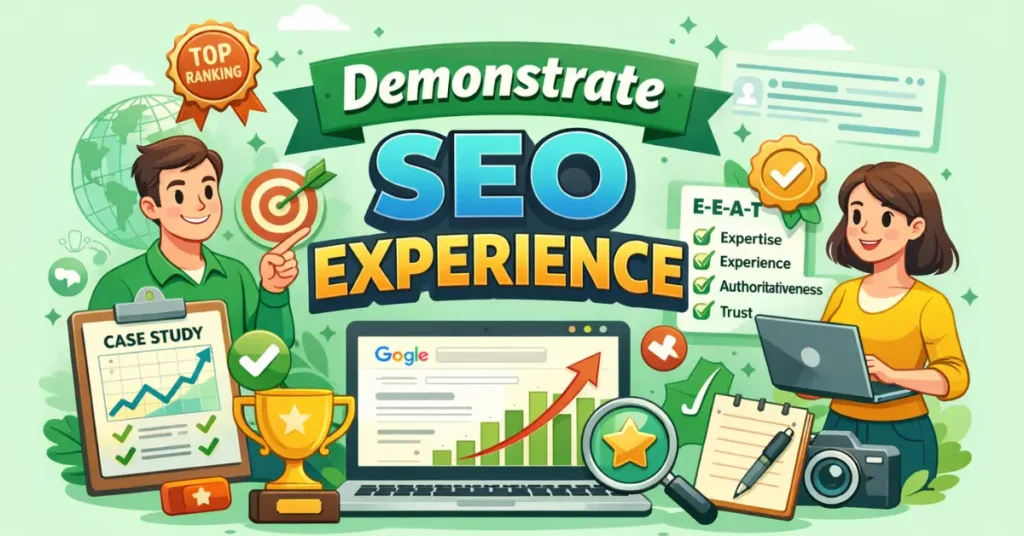
In a search ecosystem governed by neural matching, AI Overviews, and strict core updates, demonstrating SEO experience requires far more than showing upward-trending traffic graphs.
To demonstrate SEO experience by relying on superficial keyword tracking reports and vanity metrics actively erodes your credibility with enterprise decision-makers and automated search quality filters alike.
To signal genuine E-E-A-T (Experience, Expertise, Authoritativeness, Trustworthiness) in an AI-first search landscape, practitioners must move from basic reporting to verifiable multi-dimensional proof.
This guide breaks down the critical mistakes practitioners make when attempting to demonstrate expertise and outlines the technical and semantic frameworks required to build undeniable industry authority.
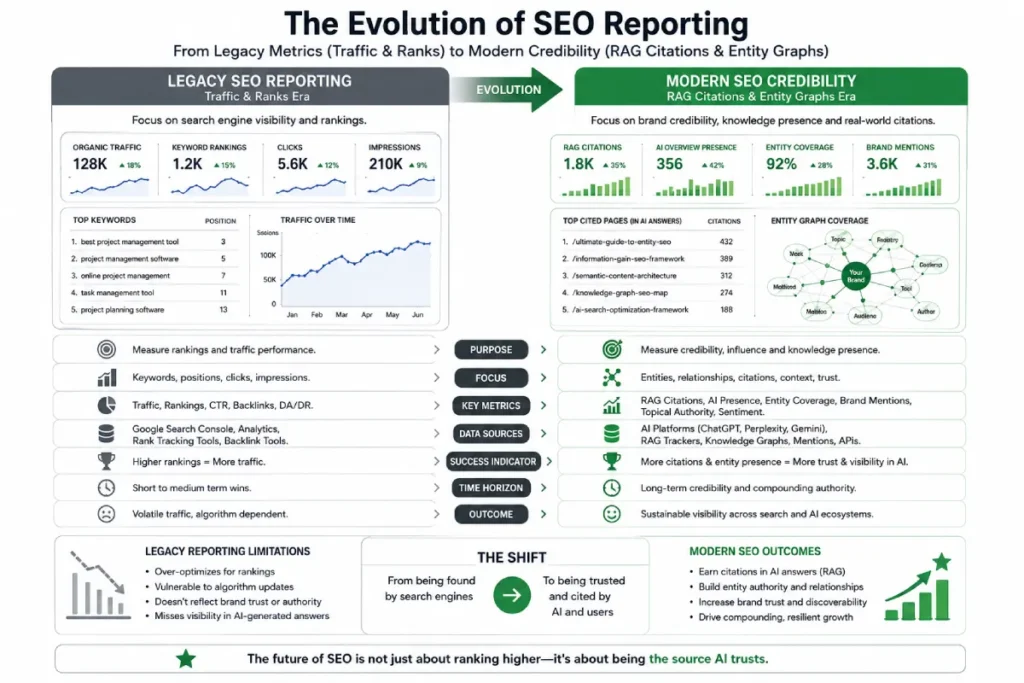
The Paradigm Shift: Why Legacy SEO Metrics Fail
The criteria used to evaluate SEO capability have fundamentally shifted. Single keyword tracking and raw session counts no longer serve as standalone proof of competence.
Modern search engines analyze full conceptual clusters rather than isolated strings of text. An authoritative domain can rank for thousands of semantic variants without explicitly using exact-match terms, provided it deeply satisfies the underlying entity graph.
Transitioning from simple keyword tracking to organizing topics over keywords aligns your publishing framework directly with how search engines and Retrieval-Augmented Generation (RAG) models parse information.
Mistake 1: Relying on Vanity Metrics Instead of Attribution
Reporting raw traffic volume without business context is one of the fastest ways to lose credibility. High traffic spikes often hide severe search intent misalignment, driving visitors who never convert.
Addressing the Intent Gap
True expertise is demonstrated by identifying the semantic gap between an informational query and a commercial purchase. Driving top-of-funnel traffic is useless if the content misinterprets user intent.
To accurately map user journeys, practitioners must implement precise organization of keywords by user intent across every stage of the search funnel.
Omni-Channel Attribution & The Assistance Effect
B2B search journeys involve multiple touchpoints across search results, AI agents, and direct branded visits. Last-click attribution models severely underreport the true impact of top-of-funnel technical guides.
| Attribution Model | Primary Focus | Failure Point |
|---|---|---|
| Last-Click | Immediate converting page | Ignores top-of-funnel educational impact |
| First-Click | Initial touchpoint page | Fails to account for downstream conversion paths |
| Omni-Channel (OCAM) | Full Search-to-CRM pipeline | Requires BigQuery / custom data warehouse setup |
Connecting Google Search Console data with CRM lifecycles (such as HubSpot or Salesforce) demonstrates advanced enterprise experience that far exceeds standard analytics setups.
Mistake 2: Ignoring Retrieval-Augmented Generation (RAG)
Large Language Models (LLMs) and answer-engine features rely on Retrieval-Augmented Generation (RAG) to synthesize zero-click responses.
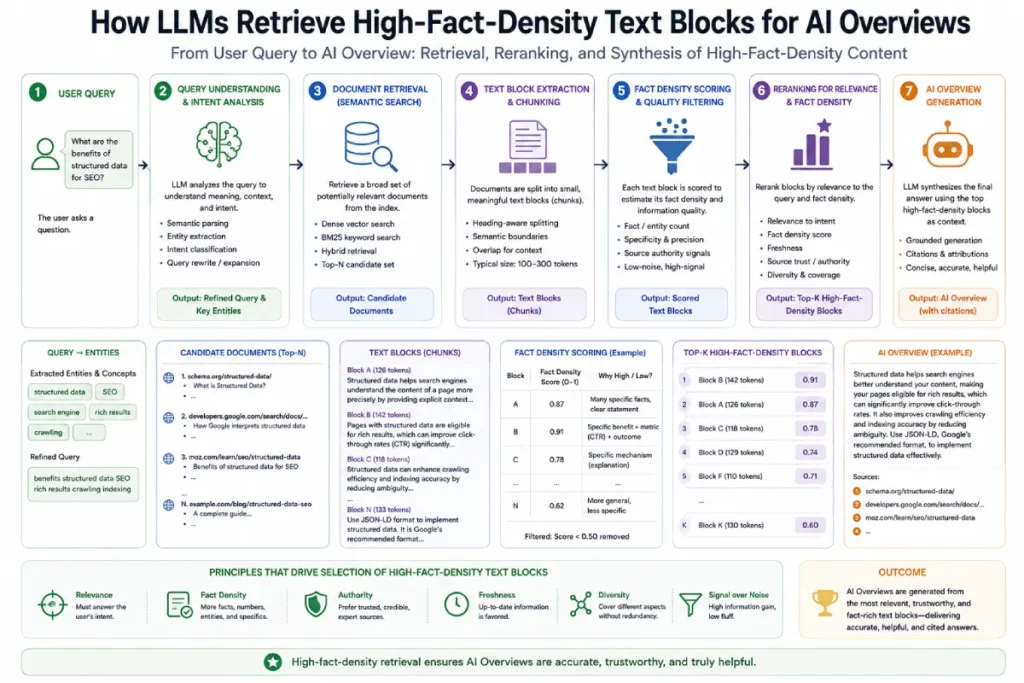
Fact-Density & Answer Extraction
LLMs vectorize content into mathematical representations. Fluffy, long-winded introductions increase vector distance, leading search agents to exclude your content from generative summaries.
To optimize for AI search agents:
- Increase Information Density: Place concise, single-sentence definition blocks directly beneath key target headings.
- Maintain Structural Precision: Use clear semantic HTML tags to eliminate ambiguous entity relationships.
- Align with Trust Benchmarks: Follow enterprise standards, such as those detailed in the NIST AI Risk Management Framework, to present verifiable, low-risk data sources.
Optimizing content for easy extraction for zero-click search queries ensures your brand retains visibility even as traditional click-through rates shift.
Mistake 3: Publishing Flawless “Perfect” Case Studies
Presenting case studies that only show uninterrupted upward lines harms trustworthiness. Experienced SEO practitioners know that core algorithm updates, technical migrations, and unexpected traffic shifts are part of modern search.
The Diagnostic Recovery Case Study
High-E-E-A-T case studies showcase diagnostic resilience:
- The Issue: Detail a real update impact or technical failure.
- The Audit: Explain the exact diagnostic procedures used to isolate the root cause.
- The Strategy: Outline the specific content pruning, schema adjustments, or technical fixes applied.
- The Outcome: Show the step-by-step recovery trajectory and long-term risk mitigation.
Mistake 4: Superficial Technical SEO & Ignoring INP
Technical SEO extends far beyond fixing broken links or writing meta descriptions. In modern technical audits, Interaction to Next Paint (INP) serves as a major indicator of engineering maturity.
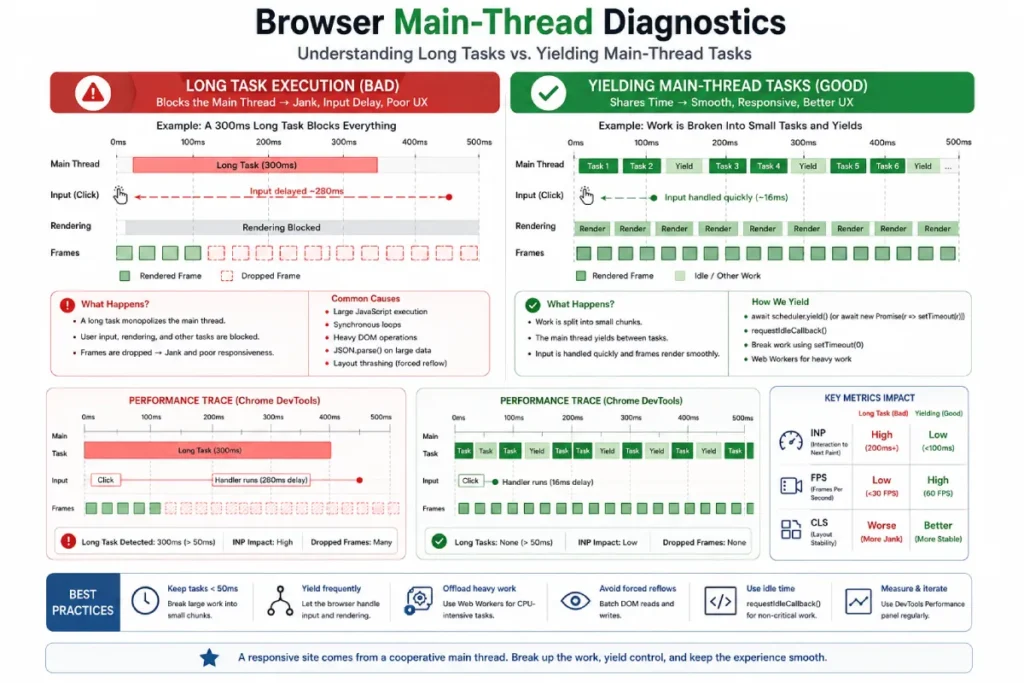
Mastering Main-Thread Execution
INP measures the latency of all user interactions (clicks, taps, keypresses) throughout a page’s entire lifecycle. Heavy JavaScript execution and third-party tracking pixels block the main thread, leading to UI freezes.
To solve complex INP issues:
- Audit Browser APIs: Benchmark performance against the official W3C Web Performance Working Group specifications.
- Yield Main-Thread Tasks: Break monolithic JavaScript functions into smaller micro-tasks using
requestIdleCallback. - Optimize Rendering Architecture: Address rendering delays caused by Client-Side Rendering (CSR) by moving critical commercial pages to Server-Side Rendering (SSR).
Understanding complex JavaScript rendering logic proves that your technical capabilities extend to browser performance engineering.
Mistake 5: Isolated Content & Broken Semantic Architecture
Publishing isolated articles without a clear internal semantic network hampers topical authority. Modern search crawlers evaluate the interconnectedness of your entity graph.
Connecting Entities with JSON-LD
While well-structured text provides human context, structured markup provides deterministic data for machine learning models.
Deploying a custom, nested JSON-LD schema framework removes computational guesswork by explicitly linking your authors, organization, and topic nodes together.
Adhering to foundational W3C Linked Data principles transforms your website from a collection of isolated HTML pages into a verified, interconnected data asset that search engines and AI agents inherently trust.
Conclusion
Demonstrating SEO experience requires moving past vanity metrics and superficial optimization tricks.
By mastering multi-touch attribution, optimizing for agentic RAG retrieval, diagnosing complex INP technical friction, and architecting robust semantic graphs, you establish undeniable authority in modern search.