
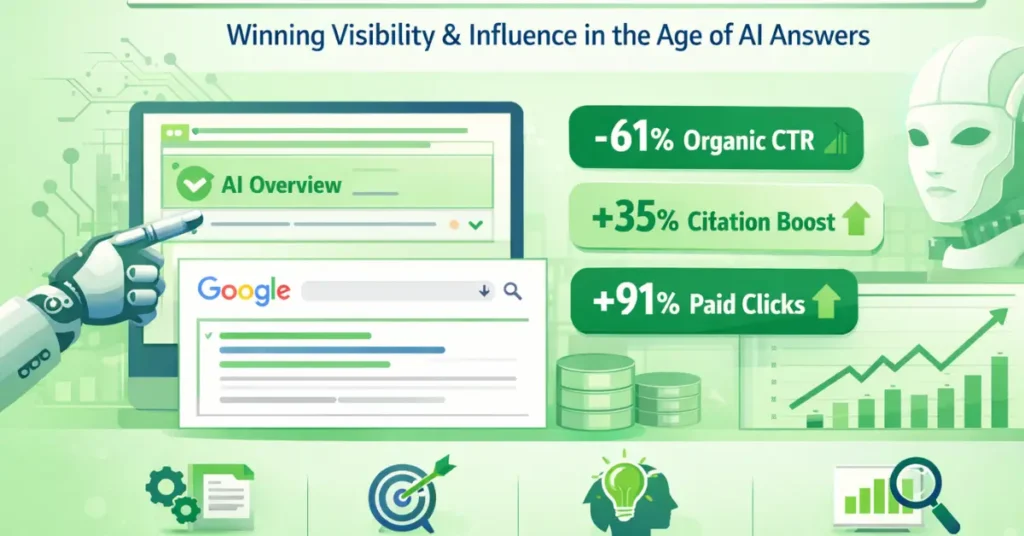
The shift in organic click-through rates represents a structural evolution in search behavior. The transition from the traditional Traffic Economy to an Influence Economy forces a complete re-evaluation of search visibility.
In this environment, AI Overview CTR Optimization is the process of engineering content to cross the AI Extraction Threshold (AIET).
Before you can dominate the AI Overview layer or optimize for citation elasticity, you must ensure that your content flows efficiently through Google’s ingestion pipeline.
Having a URL in a sitemap does not guarantee it has been discovered, and being crawled does not guarantee it has been semantically parsed for the AI extraction layer.
If crawl budget is wasted on low-value or duplicate parameter pages, high-value semantic hubs may never reach the indexing threshold required for AI citations. To diagnose pipeline bottlenecks, explore our guide on how search engines discover new pages.
The Tiered SERP Economy: Participation States
Search visibility is increasingly dictated by “AIO Participation State” rather than traditional numerical rank.
| Participation State | SERP Mechanics | Strategic Focus |
|---|---|---|
| AIO Present & Cited | High brand authority; machine-validated endorsement. | Defensive Authority & Entity Integrity |
| AIO Present & Not Cited | High risk of zero-click traffic absorption. | Immediate Schema & DOM Optimization |
| No AIO Present | Traditional organic blue link layout. | Standard Technical & On-Page SEO |
The Answer Supremacy Effect
AI Overviews often satisfy informational queries directly on the Search Engine Results Page (SERP), creating a zero-click experience.
When content is purely informational, search engines extract the value, satisfy the user, and remove the need for a click-through.
Behavioral Psychology: The Consumption-Interaction Gap
The Information Sufficiency Threshold (IST) represents the point where an AI generates an answer that satisfies the user’s intent directly within the SERP.
In this model, a click is no longer merely a sign of initial interest; it is a Signal of Unresolved Intent. Users click when the AI’s summary is incomplete or insufficient for their needs.
To capture high-intent traffic, build content that provides “Un-summarizable Value”—such as complex multi-variable data, interactive utilities, or deep expert case studies that exceed simple summarization limits.
Targeting hyper-specific edge cases where AI models lack confidence allows you to capture decision-ready users. To implement this effectively, consult our framework on the science of specificity in semantic SEO.
The Intent Gradient & Citation Elasticity
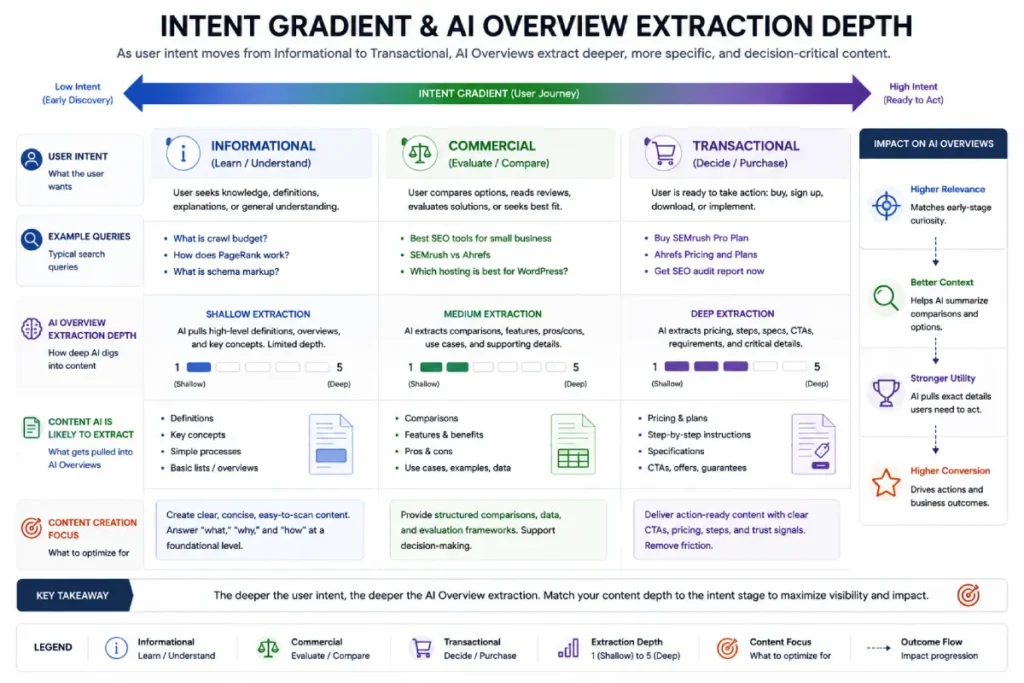
CTR dynamics vary across query types:
- Informational Intent: High zero-click rate. AI synthesizes standard definitions instantly.
- Commercial Investigation: The core citation battleground. Users actively compare sources.
- Transactional Intent: High resilience. AI cannot replicate the trust required for purchases or contracts.
To align your site with shifting intent, review our expert guide to intent-based SEO and advanced keyword mapping.
Citation Elasticity: Cross-Channel Trust Transfer
When a brand is cited organically in an AI Overview, its Paid Search (PPC) campaigns often experience a significant increase in user trust and interaction.
Users view traditional ads with standard skepticism. However, when an AI model cites the brand as an authoritative source, it creates a trust transfer that machine evaluation validates, making paid placements far more effective.
Engineering Information Gain: Crossing the AIET
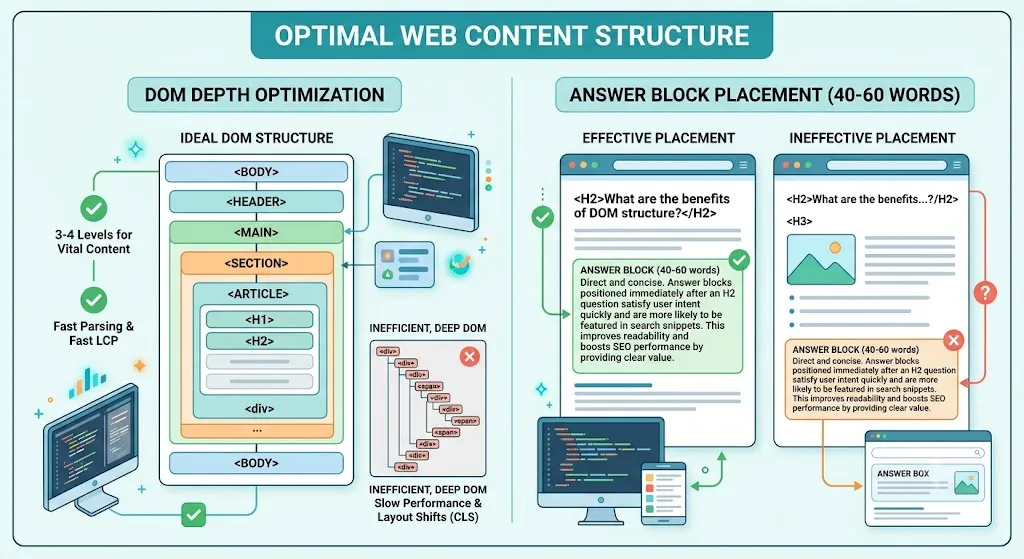
Crossing the AI Extraction Threshold (AIET) requires structured data and clean Document Object Model (DOM) technical design.
- The Direct Answer Block: Place a clear 40–60 word summary in your HTML immediately following key headers.
- Proprietary Data & Assets: Publish original research that forces AI models to cite your domain as the primary source.
- Semantic Schema Linking: Utilize Schema.org structured data standards to link your entities, credentials, and citations explicitly.
- Semantic DOM Architecture: Adhere strictly to W3C standards for semantic HTML. Flat, expressively sectioned HTML trees reduce parsing overhead for non-human AI agents.
Publishing derivative, consensus-only content guarantees low visibility in AI-driven search. To protect your site against automated content replacement, adopt our operational guide for helpful, user-focused SEO content writing.
Furthermore, if your extraction blocks require heavy client-side JavaScript execution, crawlers may skip them entirely. For a deep dive on managing render queues, read our analysis on DOM depth and client-side architecture.
To transition your site from standalone keyword targets to structured entity networks, follow our blueprint for dominating SERPs and AI Overviews with topical authority.
Core Performance Metrics for AI Search
Shift your reporting frameworks from simple keyword positions to entity influence indicators:
- Answer Ownership Rate (AOR): How frequently your site’s content defines the direct answer in the AI summary.
- Citation Share of Voice (CSV): The frequency of your brand citations relative to competitors within AI Overviews.
- Brand Search Lift: The rate at which AI Overview citations drive subsequent direct brand searches.
Conclusion
The shift toward AI-mediated synthesis elevates search strategy from link-building to total entity authority.
Success in this ecosystem requires engineering un-summarizable value, crossing the AI Extraction Threshold through clean semantic code, and positioning your brand as the primary authority across organic and paid search touchpoints.