
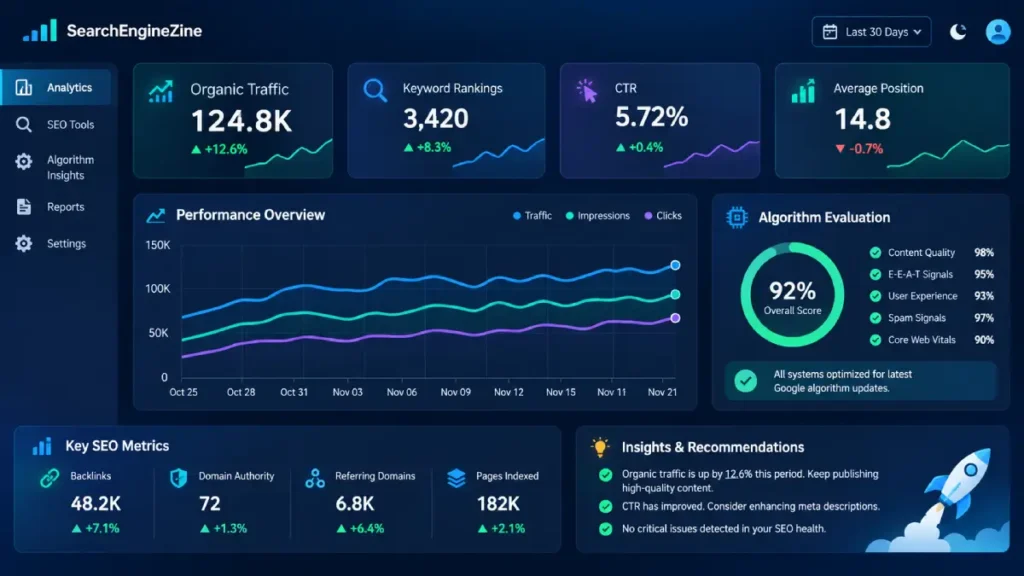
The Importance of Google’s Core Update 2026
Google’s core update 2026 continues to redefine the search landscape, demanding rigorous adherence to quality, user intent, and authoritative content.
In 2026, the algorithmic environment has matured significantly, moving past basic keyword optimization into sophisticated semantic understanding and multi-signal validation.
For SEO professionals and website owners, navigating a core update requires separating short-term volatility from structural deficits.
This comprehensive guide examines the core update ecosystem of 2026, analyzing how modern algorithms assess site quality, why traditional shortcuts fail, and how practitioners can build resilient publishing strategies.
The Evolution of Google’s Core Ranking Systems
Core updates are broad changes designed to ensure that Google delivers overall relevant and authoritative results across all queries.
Unlike specific algorithm rolls—such as spam updates or helpful content system integrations—core updates re-evaluate the entire corpus of indexed content.
By 2026, Google’s core ranking infrastructure integrates advanced neural matching, user interaction feedback loops, and multi-modal content analysis.
This means search engines do not merely look at text strings; they evaluate context, entity relationships, and user satisfaction metrics across various touchpoints.
When a core update hits, sites frequently experience pronounced ranking shifts not because of a single infraction, but because the algorithm has recalibrated how it weighs hundreds of quality signals relative to changing user expectations.
Understanding this macro-level shift is essential. Practitioners must recognize that core updates are rarely about fixing a single broken link or adjusting a meta tag; they are holistic assessments of a website’s overall trustworthiness, topical authority, and editorial rigor.
E-E-A-T and First-Hand Experience Realities
Experience, Expertise, Authoritativeness, and Trustworthiness (E-E-A-T) remain foundational pillars of Google’s quality evaluation framework. However, the interpretation of E-E-A-T in 2026 has become increasingly strict and nuanced.
- Demonstrating Genuine Experience: Content that lacks first-hand perspective, proprietary insights, or original testing is routinely downgraded in favor of pieces authored by verified practitioners or subject matter experts.
- Expert Author Credentials: Transparent author bios, verifiable credentials, and demonstrable industry engagement are no longer optional best practices; they are critical trust signals.
- Editorial Independence and Transparency: Sites must maintain clear editorial guidelines, accurate correction policies, and transparent sponsorship disclosures.
When a core update evaluates a domain, it looks at the collective corpus of the site to establish topical authority.
A sudden drop in rankings often reflects a dilution of topical focus or a perceived decline in editorial integrity across secondary or legacy pages.
Content that merely synthesizes existing web consensus without adding unique value or original research struggles to maintain visibility against primary sources.
Technical Performance and User Experience Integration
While core updates primarily focus on content quality and relevance, technical foundations act as the gateway through which search engines crawl, render, and evaluate pages.
Core Web Vitals—comprising Largest Contentful Paint (LCP), Interaction to Next Paint (INP), and Cumulative Layout Shift (CLS)—have evolved into deeply integrated ranking and user experience components.
Furthermore, modern user experience extends beyond speed metrics into accessibility, clean design, and structural clarity.
Pages laden with intrusive interstitial ads, confusing navigation, or deceptive layouts face severe penalties during major algorithm adjustments.
Ensuring robust technical hygiene ensures that Google’s crawlers can effectively interpret content semantics without rendering roadblocks.
Key Technical Checklist for Core Update Readiness
- Streamlined Rendering: Ensure critical content is rendered in the initial HTML response rather than relying entirely on complex client-side JavaScript execution.
- Mobile-First Optimization: Verify that mobile layouts deliver an identical depth of information and seamless usability compared to desktop counterparts.
- Robust Security: Maintain active HTTPS implementation and eliminate mixed content warnings across all templates.
Diagnosing Traffic Fluctuations: Volatility vs. Penalty
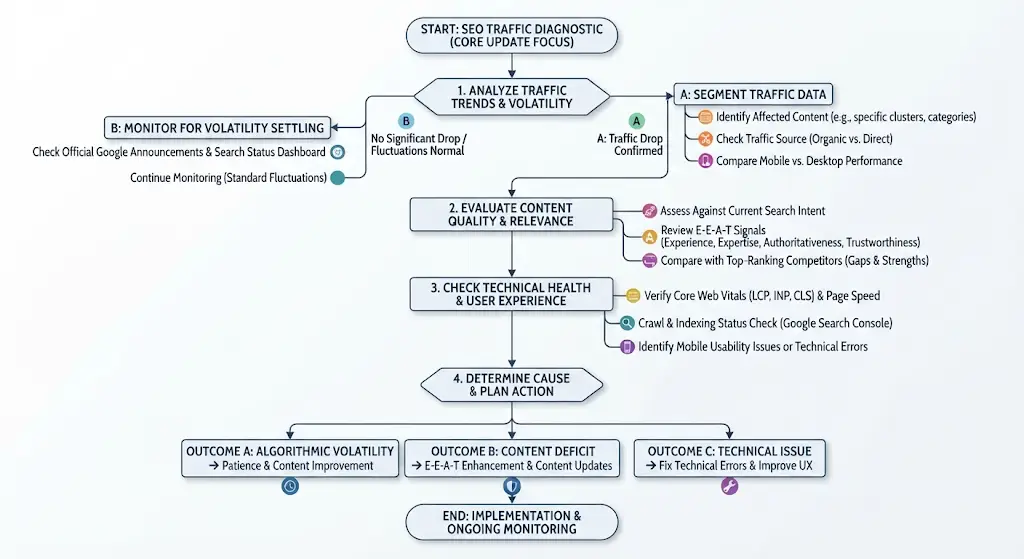
A common pitfall following the announcement or rollout of a core update is reactive panic. Fluctuations during the first 48 to 96 hours of a rollout are often standard algorithmic turbulence as data centers synchronize, which can be tracked via the Google Search Status Dashboard.
SEO professionals must adopt a structured diagnostic approach:
- Analyze Segmented Traffic: Determine whether drops are localized to specific content clusters, informational queries, or commercial transactional pages.
- Evaluate Competitor Shifts: Examine who gained the visibility you lost. Are the replacement pages demonstrating superior E-E-A-T, deeper original research, or better intent satisfaction?
- Review Log Files: Check server logs to ensure crawler behavior has not changed and that no accidental noindex tags, robots.txt blocks, or canonical mismatches were introduced.
- Avoid Knee-Jerk Deletions: Mass-deleting or abruptly rewriting content without clear evidence often exacerbates instability.
Actionable Recovery and Growth Frameworks
Recovering from a core update downgrade requires patience, objective auditing, and systematic improvement. Because core updates are holistic, quick fixes rarely restore lost rankings.
- Conduct Content Audits: Review underperforming pages against current search intent. Ask whether the page provides unique value or if it merely aggregates existing internet consensus.
- Enhance Depth and Accuracy: Update outdated statistics, add expert commentary, incorporate original data points, and refine formatting to improve readability.
- Strengthen Topical Clusters: Build robust internal linking hierarchies around core topical pillars, ensuring that authoritative hubs point logically to supporting subtopics.
- Cultivate External Recognition: Focus on organic brand mentions, digital PR, and industry recognition that reinforces external trust.
Future-Proofing Your Publishing Strategy
The publishing landscape in 2026 is characterized by rapid technological advancement and changing consumer habits. To remain resilient against future core updates, organizations must prioritize sustainable quality over short-term optimization tricks.
- Prioritize Reader Value Above All: Design content to solve specific user problems comprehensively and efficiently.
- Maintain Rigorous Fact-Checking: Verify all claims, cite reputable primary sources, and eliminate speculative or exaggerated assertions.
- Embrace Continuous Improvement: Treat website maintenance as an ongoing iterative process rather than a one-time project.
Conclusion
Google core updates in 2026 reinforce a singular truth: sustainable search visibility rewards genuine utility, authoritative expertise, and unwavering commitment to user satisfaction.
By understanding algorithmic shifts, maintaining rigorous editorial standards, and focusing on long-term value, SEO professionals can navigate volatility and build enduring digital assets.